
Pickleball rules explained: A complete beginner’s guide
MatchPoint Competitions writer Joshua Foster, who works with the UK’s home of padel, tennis & pickleball competitions, provides a guide to all the rules for pickleball.
What is pickleball?
Pickleball is one of the fastest-growing racket sports in the UK and worldwide. It blends the best of tennis, badminton, and table tennis into a fun, fast-paced game that anyone can play.
Played on a small court with paddles and a perforated plastic ball, pickleball is easy to learn but offers plenty of tactical depth for competitive players.
The basic rules of pickleball
1. How to start a point
- Each rally begins with an underhand serve.
- The ball must be struck below the waist and hit diagonally across the court.
- The serve must clear the non-volley zone (also called the kitchen).
- The serve must land in the opposite service box.
- Each player gets one serve attempt, except if the ball touches the net and lands in the correct box then it’s a let serve.
2. Scoring system
Pickleball uses a unique rally scoring system where:
- Only the serving side can win points.
- Games are typically played to 11 points, and a team must win by two points.
- In tournament play, games may go to 15 or 21 points.
A typical score is announced as the server’s score – receiver’s score – server number (e.g. “4–2–1”).
3. Double-bounce rule
After the serve, both teams must let the ball bounce once before volleying:
- The receiving team must let the serve bounce.
- The serving team must let the return bounce before playing it.
After these two bounces, players may volley or play off the bounce freely.
You may also like: Win the diadem warrior blucore pickleball bundle worth £250

4. The non-volley zone (“The kitchen”)
The non-volley zone, or kitchen, is the seven-foot area on both sides of the net.
- Players cannot volley (hit the ball in the air) while standing in or touching the kitchen.
- You may enter the kitchen only after the ball bounces there.
- Stepping on the line while volleying is a fault.
This rule keeps rallies fair and encourages placement and strategy over pure power.
5. Faults in pickleball
A fault occurs when a player:
- Hits the ball out of bounds.
- Hits the ball into the net.
- Volleys in the kitchen or steps on the kitchen line.
- Serves into the wrong area or out of bounds.
- Misses the ball completely on a serve.
When the serving team commits a fault, the serve passes to the next player or to the opposing team.
6. Serving rotation in doubles
In doubles pickleball:
- Each team has two serves per turn, one for each player.
- Only the first server of the game serves once before the serve goes to the opponents.
- After each side-out, the serve begins from the right-hand court.
Proper serving rotation keeps the game balanced and ensures fair play.
Equipment and court size
- Court Dimensions: 20 feet wide x 44 feet long (same as a badminton court).
- Net Height: 36 inches at the sidelines, 34 inches at the center.
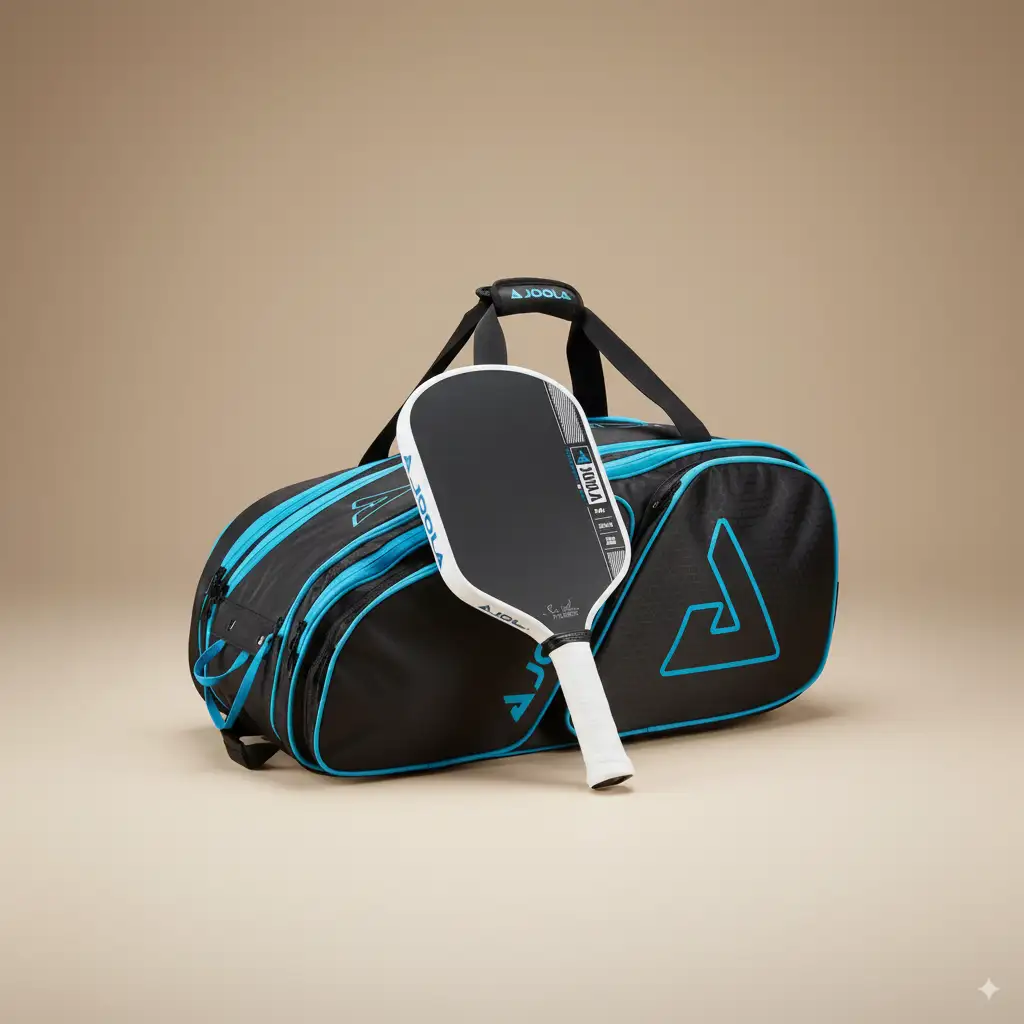
- Paddles: Solid paddles made from composite materials (no strings).
- Ball: Lightweight plastic with holes (similar to a wiffle ball).
Key pickleball tips for beginners
- Focus on control rather than power, placement wins points.
- Stay out of the kitchen unless the ball bounces there.
- Keep your paddle up and ready for quick reactions.
- Communicate with your partner to cover the court efficiently.
- Master your serve and return, consistency is key.
Common pickleball rule mistakes
- Forgetting the double-bounce rule.
- Volleying from inside the kitchen zone.
- Serving overhand or above the waist.
- Standing in the wrong position when serving or receiving.
Learning these simple rules early prevents confusion and keeps matches flowing smoothly.
Read next: How playing racket sports boosts mental health and fitness