The United States triumphed over Great Britain in a thrilling finale to the first-ever Anglo American Padel Cup, held at Padel Hub North London, capturing the title with a 53–43 victory.
The groundbreaking international padel tournament featured 64 elite athletes and marked a new chapter in the storied sporting rivalry between the two nations.
A landmark moment for padel in Britain and the USA
The Anglo American Padel Cup has already established itself as the most significant transatlantic padel competition to date, bringing together top-tier talent from both sides of the Atlantic.
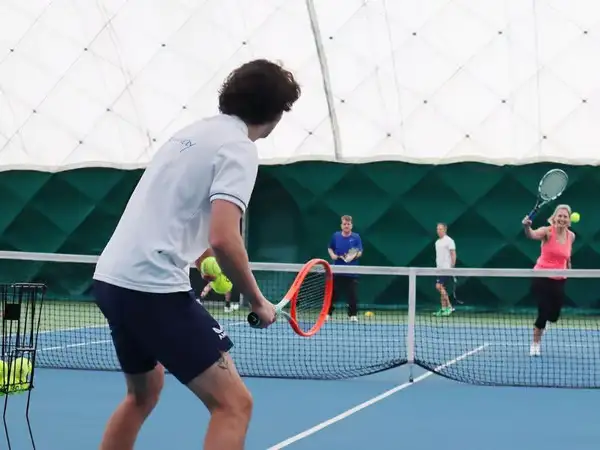
Over two action-packed days, players competed across 48 matches, thrilling packed crowds and online audiences with world-class shotmaking and sportsmanship.
Dramatic two day showdown between padel powerhouses
Team USA took a commanding 25–15 lead after Day One, but Team Great Britain came roaring back on Day Two.
Early victories from GB’s mixed pairs, Laura Jackson & George Weller, and Alice Keddie & Rafa Vega, narrowed the gap as the hosts surged ahead to a 37–35 lead by mid-afternoon.
With just two matches remaining after 46 fiercely contested battles, the Anglo American Padel Cup hung in the balance.
Team GB needed to win both to claim the title. However, the U.S. veterans Ron Bobman and Tom Bartzen delivered under pressure, defeating Britain’s Sandy Case and Minter Dial in the Men’s 60+ division to secure the Cup for Team USA.
Even with victory decided, the final match kept fans on the edge of their seats.
The Women’s Open No. 2 pairs, Dhany Quevedo and Antonella Santeusanio (USA) versus Alice Keddie and Victoria Nicholas (GB) delivered an unforgettable 7–6, 7–6 duel filled with dazzling rallies and emotional energy.
The crowd’s cheers reflected the shared pride of both nations in a match that perfectly capped off the inaugural competition.
Organisers and partners celebrate a milestone for international padel
Event founders Bill Ullman, Ben Nichols and Joelle Quinn praised both teams and supporters.
“Our congratulations to Team USA for winning the first-ever Anglo American Padel Cup,” they said.
“This event turned out to be many things an extraordinarily exciting competition, a new chapter in the historic sporting rivalry between the U.S. and Great Britain, and a showcase for the incredible padel talent emerging in both countries.”
They also expressed gratitude to title partners Playtomic and Babolat, whose backing helped bring the event to life.
“Most of all, we thank the players — true pioneers who made this first edition possible. We can’t wait for next year’s Anglo American Padel Cup in the USA.”
Team USA captains reflect on a breakthrough event
Team USA Women’s Co-Captains Ana Magrini and Lisa Teer hailed the event as a turning point for elite international padel competitions, saying: “We are so proud and honored to have represented the U.S. against Great Britain.
“The Anglo American Padel Cup has set a new benchmark for how international padel tournaments should be run. We leave with a trophy and lifelong friendships.”
A new era for transatlantic padel competition
The success of the Anglo American Padel Cup 2025 cements its place as a cornerstone of the global padel calendar.
With the 2026 edition set to take place in the United States, excitement is already building for what promises to be an even bigger and more competitive sequel in the world’s fastest-growing racket sport.
We have the America’s Cup, Davis Cup and Ryder Cup – and now, the iconic century-long transatlantic rivalry between Britain and the United States is set to reach new heights this month as the Anglo-American Padel Cup’s inaugural edition begins in North London.
The world’s fastest-growing racket sport is taking a new form as padel now has its own transatlantic team competition, featuring some of the best players from two emerging nations in the sport, writes Sports News Blitz’s Shameeka Voyiya.
The inaugural Great Britain vs United States annual Padel competition will debut at the Padel Hub in North London this month, with the US preparing to host in 2026.
The Anglo-American Padel Cup will feature the best players in Britain and America across Open and Age Group Divisions for men and women.
The British and American teams will consist of four players (two teams) per category in both Men’s and Women’s competitions, with a total of 64 players participating during two days of competition between 10 and 11 October.
The Cup will see British padel professionals Rafa Vega and Eloise Tait face their American counterparts in different age groups, with the first team to reach 49 points set to go down in history as the competition’s first ever champions.
British Men’s captain and Lawn Tennis Association (LTA) number one Men’s player Rafa Vega expressed his anticipation in a statement, saying: “I am excited to be captaining the Britain’s Men’s team in the Open category of what promises to be a hugely-exciting debut Anglo American Cup.
“To have the opportunity to lead out the British Men’s team against our American counterparts will be a moment of massive pride.”
The Anglo-American Padel Cup organisers hope the competition will carry the same high energy as its golf, tennis and sailing counterparts.
“We wanted to create something that could become an annual competition, that can play on much deeper trans-Atlantic friendships, build on what people know from other sports and do it in padel,” co-founder Ben Nichols told City AM.
“I always say that the US is probably a couple of years behind the UK with padel. It’s well on its way now and growing very fast.
“We wanted to be first in creating this event and something that can cross the pond each year.”
Could the Anglo-American Cup expand to other countries?
While the America’s Cup and Davis Cup have expanded to include other nations, there is a budding expectation that this will be the case for the Anglo-American Padel Cup as well.
“We wanted to start between these two countries because they’re at similar levels in terms of how advanced they are with the sport,” said Nichols.
“That’s not to say it can’t go wider. Obviously, the Ryder Cup’s gone wider, other competitions have evolved – they’ve got wider concepts of continents against the world. So it could well go that way but I think we wanted to make it manageable in year one.
“There’s definitely room for a discussion of how we can work together. I think the Britain against America thing has legs because of where the countries are in the sport now.
“But a wider continental cup, there’s going to be a lot of top players from different countries that can compete in that, so could there be space for both? Definitely. Could it morph into one? That’s also a possibility.
“I think, for now, we want to grow this, and we’re fully collaborative in terms of others that want to work with us and pull together.”
Racket sports like tennis, padel, squash, badminton and pickleball are more than just fun activities; they are powerful tools for improving both mental health and physical fitness.
Whether you’re a beginner picking up a padel bat for the first time or a seasoned tennis player, the benefits extend far beyond the court for all walks of life.
Here MatchPoint Competitions writer Joshua Foster looks further into the benefits of playing racket sports.
Improves physical fitness
Playing racket sports is a full-body workout. Quick sprints, lateral movements, and powerful swings build cardiovascular endurance, muscle strength, agility, and coordination.
Unlike repetitive gym routines, the fast-paced and varied movements in sports like tennis and padel keep workouts engaging while burning calories effectively.
Reduces stress and anxiety
Racket sports are proven to release endorphins, the body’s natural “feel-good” chemicals.
The combination of exercise and social interaction lowers stress levels, reduces anxiety, and improves overall mood.
Concentrating on the game also provides a mental break from daily worries, promoting mindfulness and presence.
Boosts brain function
These sports require quick decision-making, strategy, and hand-eye coordination, which stimulate the brain and improve cognitive skills.
Regularly engaging in activities like padel or pickleball has been linked to better memory, sharper focus, and even reduced risk of cognitive decline with age.
Most racket sports are either doubles-based or played in a community setting.
Joining a club or group creates opportunities for social bonding, combating feelings of loneliness or isolation.
A strong support network is a key factor in maintaining long-term mental well-being.
Builds resilience and confidence
Learning new skills, improving performance, and competing, whether casually or seriously, builds self-confidence and mental resilience.
Overcoming challenges on the court often translates into greater determination and problem-solving ability in everyday life.
Supports healthy aging
For older adults, racket sports provide a safe and enjoyable way to stay active.
They improve balance, flexibility, and reaction time, helping to prevent injuries while keeping the mind sharp and engaged.
Final thoughts
From boosting cardiovascular fitness to enhancing emotional well-being, racket sports deliver the whole health package.
A combination of physical activity, mental stimulation, and social connection, sports like tennis, padel, and pickleball are powerful allies for a healthier body and a happier mind.
Tennis, padel and pickleball are all enjoying surges in popularity across the globe
But what are the main differences between the three sports? MatchPoint Competitions writer Joshua Foster takes a look here…
Court and playing area
Players play tennis on a larger court (23.77m x 8.23m for singles) with different surfaces such as clay, grass, or hard courts.
In padel, players use a smaller, enclosed court (20m x 10m) surrounded by glass and mesh walls, which allows the ball to bounce back and create dynamic rallies.
Pickleball uses the smallest court (13.41m x 6.10m), similar in size to badminton, with a low net and no walls.
Tennis players use strung rackets and pressurized balls. Power and spin play a big role in the ability to play the game, as well as physical conditioning.
Padel players use solid, perforated, stringless rackets made mostly from carbon fibre, and the balls have slightly lower pressure than standard tennis balls.
Pickleball involves a paddle similar to a large table tennis bat with a perforated plastic ball called a wiffle, which makes the game much slower and more tactical.
Style of play
Tennis emphasizes speed, athleticism, and endurance, with long baseline rallies and strong serves playing a role in the level of your ability.
Padel blends tennis and squash. Walls extend rallies, encouraging strategy, teamwork and clever shot placement and the ability to predict bounces from the glass and cage walls.
The “kitchen” (non-volley zone) rules encourage dinks, drop shots, and precision over brute force.
Accessibilty
Tennis can be physically demanding and has a steeper learning curve, with many people taking years to perfect the art of playing.
Padel is easier for beginners since rallies last longer and power is less important. Many courts are available to the public, making it easier to start.
Pickleball is considered the most beginner-friendly, popular among all ages, especially seniors, with physical conditions not affecting people’s ability to play at a social level.
Final thoughts
When comparing Tennis vs padel vs pickleball, the right choice depends on your goals.
Argentinian soccer legend Diego Maradona was famously known for his impressive skills on the field, but very few knew about his skills with the padel racket, a sport that he was just as excellent in.
Maradona was one of the first padel players to take up the sport before its rise in popularity, and in 1992 he became its first international ambassador, writes Sports News Blitz’s Shameeka Voyiya.
Passion for Padel
“Maradona played padel, he was a phenomenon, and he was right-handed. One day I played with him, and when I scored a point, he would say: ‘What a phenomenal point you made!’ And I was thinking: ‘El Diego is saying that to me!’” Nito Brea, former player and renowned coach and father of current star Delfina Brea told beIN SPORTS.
According to beIN SPORTS, Maradona’s passion for padel spurred the sport’s visibility and recognition on an international level, where he was spotted playing in locations including Madrid, Spain.
“He loved padel, his two daughters played padel,” Philippe Werts, the former member of the Belgian team and President of the Padel Federation, told Padel Magazine.
“As for him we were players of the national padel team, it made our meeting easier, in addition our padel coach, Lucas Swinnen who also installed the first padel courts in Belgium, was Argentinian and from the same area as him, he spoke the same dialect,” he added.
Even Maradona’s son, Diego Maradona Jr., confirmed in several interviews that padel wasn’t just a hobby for his father, but a fundamental part of his training routine.
“My father was very good at it. He played twice a week. We are a family that loves this sport,” he said.
Maradona appeared as a star guest at the first Padel World Championship in 1992 held in Madrid.
He even skipped a pre-match camp ahead of his debut against Bayern Munich to support the team and ended up as a co-commentator during the final on live television.
History of padel
Padel originated in Mexico in 1969 when Mexican businessman Enrique Corcuera built a walled court in his backyard to play a game similar to tennis and squash.
The sport moved to Spain in 1974 when Prince Alfonso of Hohenhole built two courts at his Marbella Club Hotel.
The first participants at the Padel World Championships included Argentina, Spain, UK and France, and in 1993, the Sports Council of Spain recognised ‘paddle’ as a sport and changed the name to ‘padel’ due to Spanish pronunciation.
British radio host Kem Cetinay has announced a gruelling feat – 24 hours playing padel – to raise funds for Capital Weekender’s official charity, Make Some Noise.
The former ‘Love Island’ star will put his limits to the test on 9 October as he rotates opponents for 24 hours – and joining him on the court will be some of his celebrity friends, Capital Weekender presenters and special guests as his opponents.
Cetinay has taken on the padel challenge to raise funds for Capital’s official charity, Make Some Noise, an organisation funding vital projects by small charities across the UK that tackle issues including mental health, poverty and homelessness.
Rapid growth
Padel has grown rapidly across the country, with six of the top 10 revenue-generating padel clubs worldwide now located in the UK, writes Sports News Blitz’s Shameeka Voyiya.
“I love padel and I’ve played some long games before, but nothing like this! 24 hours on the padel court is going to be brutal! No doubt my arms and legs will be aching, but I’m so ready to push myself to the absolute limit,” Cetinay told Charity Today.
Cetinay, who has been vocal about his passion for the sport, has spent the last two years playing and attempting to master padel.
An average padel match lasts an hour and a half, with the duration usually dependent on factors such as the players’ skill level and the match setup.
The sport is fast-paced because it employs a short scoring style (best of three sets, with each set consisting of six games).
Because a padel marathon may not be the standard (or recommended) experience for many, Cetinay will require significant preparation, endurance and recovery to complete the upcoming feat.
Tough challenge
“I have been training and getting a feel for what is ahead, and I already know it’s going to be tough,” Cetinay said.
“But if it means raising money for the incredible projects that Global’s Make Some Noise supports, then every rally, every hour, and every blister will be completely worth it! I’m determined to give it everything I’ve got.”
During the Capital Breakfast show, he revealed that the longest he has ever played was three hours, and that the original plan was a 12-hour stint until he and his team decided to double the period.
The Capital presenter is set to begin the challenge in London during Capital Breakfast with Jordan North, Chris Stark and Sian Welby on Thursday, 9 October, and will put down his racket 24 hours later on Friday, 10 October.
Padel’s rapid rise in the UK can be attributed to a combination of accessibility, visibility and cultural adoption.
In 2020, there were 87 courts scattered across the UK, making it a niche activity largely confined to private clubs or small communities.
LTA investment
Fast forward to 2025, and there are over 1000 courts, reflecting both public and private investment, with The Lawn Tennis Association (LTA) investing £6million in the growth of padel.
At the same time, increased media coverage, a huge surge in user-generated content across social media with endorsements from professional athletes, and partnerships with established tennis and leisure clubs, have boosted awareness and credibility by 43% just this last year.
Another major reason why padel is becoming so popular in the UK is due to the ease of learning the sport.
Compared to tennis, which typically requires advanced technique and higher physical demands, padel has simpler rules and offers a much simpler entry point for beginners.
The rules are straightforward, the courts are smaller, and the gameplay is lighter, which makes rallies last longer and keeps new players engaged from the very first match, making it a great sport for all age groups.
Cost and time are other leading factors in its rise in popularity, with the ability to book sessions lasting from 60 to 120 minutes through apps and websites such as Playtomic.
Flexible booking
This makes it a flexible sport for many people with busier schedules to play.
A typical 60-minute session, depending on on-peak or off-peak slots, can only cost £25 for a court.
Another great part of padel clubs up and down the country is that many provide equipment for free, meaning the only cost is booking the court, compared to tennis, where there are much higher costs.
Premium rackets/paddles, elite coaching and sporting holidays are often priced out of reach. A £180 padel racket, a five-hour tennis clinic, or a pro level pickleball bundle – these aren’t everyday purchases for most UK players.
That’s why we built Match Point Competitions: to give every player a fair chance at the best prizes in padel, tennis and pickleball.
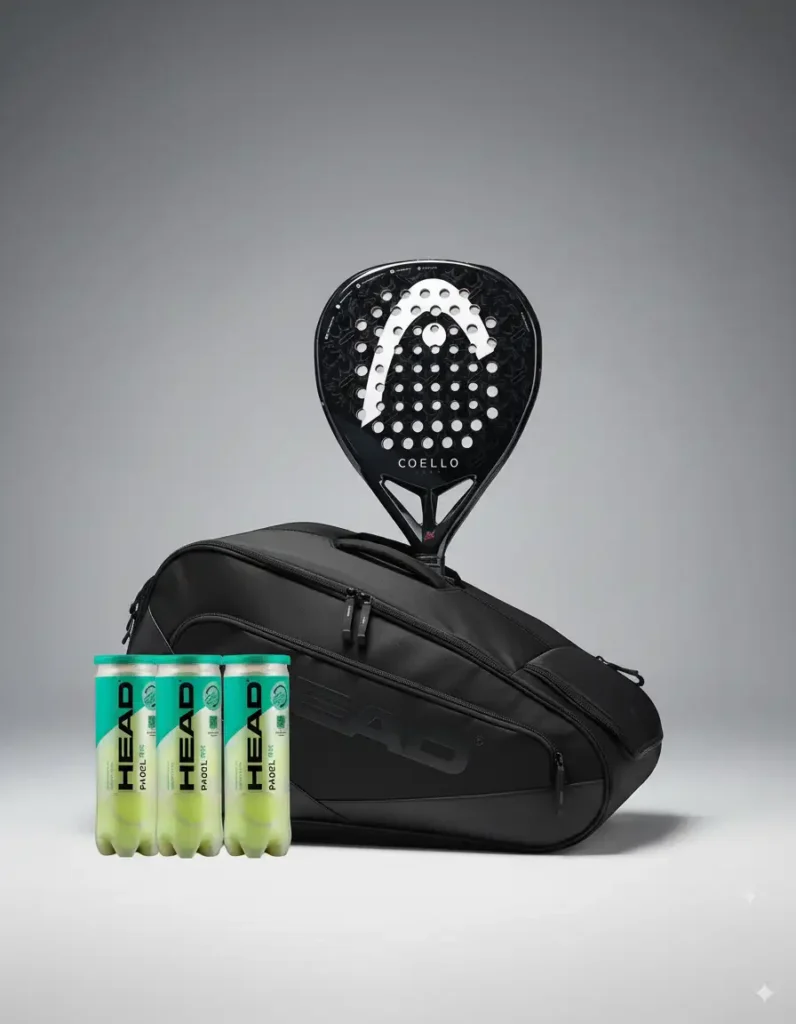
Win a Head Padel Bundle. Equipment trusted by champions
Head is one of the most respected names in racket sports. In padel, their rackets are trusted by Arturo Coello, current world number one and one of the most dominant players in the sport.
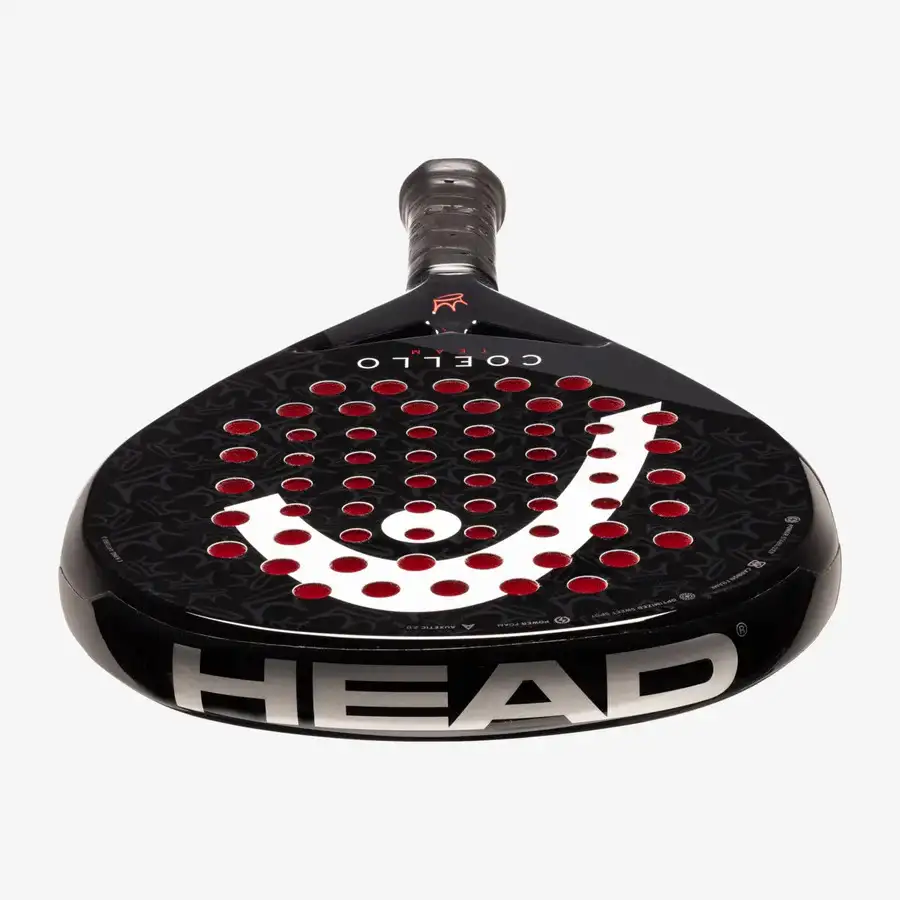
Our first padel prize is the HEAD Coello Team Padel Racket 2025 + HEAD Pro X L Padel Racket Bag + 3 Tubes of Head Balls
The featured Head Padel Competition retails at over £250+. For many players, that price tag makes it untouchable.
Our competition changes that, giving you the chance to play with the same equipment used at the very top of the game.
Win a Diadem Pickleball Bundle – the future of the game
Pickleball is booming, and Diadem is one of the fastest-growing brands shaping its future.
Known for high performance paddles and innovative design, Diadem is already making waves across courts worldwide.
With our Diadem Pickleball Competition, UK players can now get their hands on this premium piece of equipment that’s normally hard to find outside of the US.
Formula One’s ‘Drive to Survive’, tennis show ‘Break Point’ and the NFL-based series ‘Quarterback’ and ‘Receiver’ – when a sport becomes popular, a show is likely to follow.
With padel’s meteoric rise in popularity, a show was inevitable; the only question was which production company would be first on the ball.
However, it’s not the big red N who looks to have a documentary series about every major sport.
This time, a much smaller UK production company will be the one to bring the world of padel to the mainstream.
Paul Woodman, the presenter of Amazon Prime Video’s ‘On the Road’, is the mind behind the newly-announced padel series.
Set to be released in 2026 and with the working title ‘Padel Planet’, the platform on which to stream the show and the full line-up will be announced in the coming months.
Here, Sports News Blitz’s padel writer Vanely Barumire takes a look at who we would love to see on this show…
Arturo Ceollo
Ceollo’s rise to fame and the top of the padel world is a storyline that the show cannot miss.
Becoming the youngest player in history to reach the world number one ranking, Cello would make a great addition, having dominated the sport since he was only 21 years old.
The Spanish player could also attract a tennis fanbase, having played tennis before, ultimately choosing the lesser-known racket sport for “its potential”.
Also, it wouldn’t hurt the show to have someone who has a close relationship with one of the best tennis players in the world – Carlos Alcaraz.
Ranked as the world number one alongside his partner Arturo Ceollo, Agustin Tapia would be a much-needed addition to the line-up.
Nicknamed ‘The Mozart of Catamarca’, fans would certainly be excited to see behind-the-scenes footage of the Argentine – his training, matches and relationship with Arturo Ceollo.
With over 800,000 Instagram followers, Tapia’s social media reach will be vital in making the show digitally successful and plus, everyone would love to know his secret to dominating the game.
Federico Chingotto
Known as the prankster on tour, Chingotto would be a refreshing addition to the newly-announced padel series.
With the charm and humour of Daniel Ricciardo and the court coverage of Novak Djokovic, Chingotto could easily become the heart of the show.
And a much-needed relief from the high-paced world of padel.
Alejandro Galan
The other half of Chingotto is Alejandro Galan – the most well-known padel player.
With sponsorships from Red Bull and Adidas, the Spanish player has earned the recognition of being one of the best players of all time.
If the show is to be taken seriously, it cannot miss the opportunity to have Alejandro Galan involved.
As padel becomes increasingly popular across the globe, people from all walks of life are joining in on the fun and games – old and young, professional and amateur alike, as well as differently-abled individuals.
But the growth of the sport presents more opportunity for injury. A common example is a player who develops the tennis elbow (or lateral epicondylitis), which can occur from overusing the muscles and tendons in the elbow, particularly among amateur players.
With the growing number of padel players globally, experts warn of increasingly common injuries – like tennis elbow – associated with this racket sport.
Sports News Blitz’s padel writer Shameeka Voyiya delves further into what players need to know.
Common injuries
Common injuries usually arise from the dynamic movements involved in gameplay, including sudden sprints, quick changes of direction and repetitive movements.
“Many of the common padel injuries affect the lower limbs, with ankle sprains, overused knees, calf and thigh strains, and Achilles tendon [are] problems fairly common – particularly in players over 30 and in those who are new to the game,” Dr. Ashley Naidoo, orthopaedic surgeon, told IOL.
“Padel players should also be aware of the risk of upper limb injuries, as pain or strains affecting the elbow, shoulder, and wrist are also prevalent, especially among players using heavy rackets and less experienced players who are still working on improving their technique.”
Indeed, a shift from not playing a racket sport at all to potentially playing multiple times a week will likely cause strain on your body.
The rate of injury for padel players is three per 1,000 hours of training and eight per 1,000 matches. The overall prevalence range is 40 per cent to 95 per cent, according to current physiotherapy literature.
Other causes of injury include insufficient warming up, skipping warm ups entirely or using the wrong equipment, as padel rackets come in varying levels of weight and softness.
Naidoo stressed the importance of appropriate footwear in the prevention of injury.
“Padel is played on synthetic turf, often with sand infill, and requires lateral grip and ankle support. Running shoes and general trainers are unsuitable, increasing the risk of slipping or ankle rolls,” he said.
“Footwear designed specifically for padel or clay tennis surfaces offers the best protection.”
Other experts recommend building overall muscle strength using a regular exercise routine.
It’s also advised that players choose a racket that suits their playing style and strength, as an inappropriate racket can lead to strain.
“By combining smart training, proper preparation, suitable footwear, and evidence-based rehabilitation, players of all ages can enjoy padel while minimising injury risk.
“Whether you’re playing socially or competitively, whether you’re 25 or 65, playing smart today can help you stay on court and pain free for years to come,” Naidoo said.